

Introduction
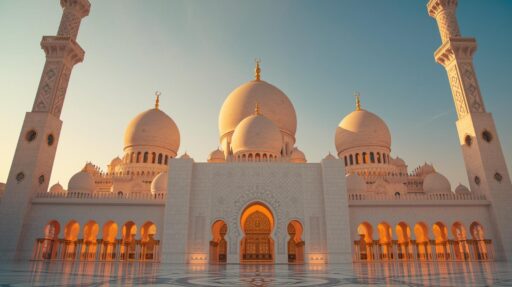
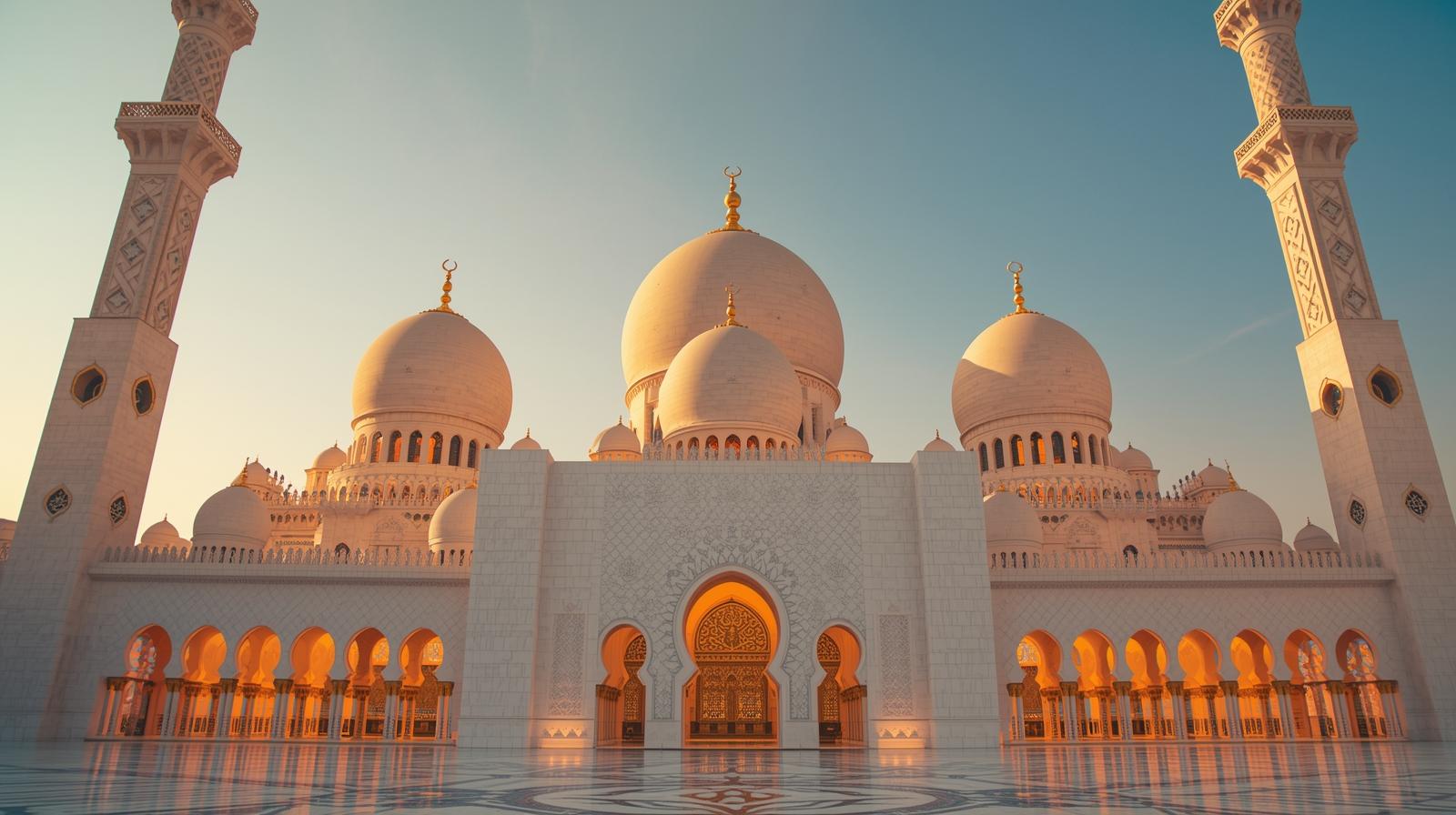
The Sheikh Zayed Grand Mosque in Abu Dhabi is more than a place of worship; it is a global icon of breathtaking beauty and profound spiritual significance. While its sheer scale and gleaming white domes are instantly recognizable, the mosque’s true architectural genius lies in the intricate language of Islamic geometry that adorns every surface. This geometry is not merely decorative; it is a visual theology, a symbolic representation of the divine order, unity, and infinite nature of God. To understand the patterns that cover the mosque’s courtyards, domes, and walls is to understand a key tenet of Islamic art and the philosophical vision behind one of the world’s most magnificent modern religious structures.
The Principle of Tawhid: Expressing Divine Oneness
At the core of Islamic art is the concept of Tawhid—the absolute oneness and unity of God. Because Islam generally prohibits the depiction of God or sentient beings in a religious context, artists and architects turned to abstraction to express spiritual ideas. Geometric patterns, which are derived from the circle—a symbol of unity and wholeness—became the primary visual language. In the Grand Mosque, this principle is manifested everywhere. The vast marble courtyard, one of the largest in the world, is paved with flowing floral mosaics that are, at their heart, complex geometric arrangements. These patterns repeat infinitely, without beginning or end, mirroring the infinite and limitless nature of the divine.
The Domes: Celestial Vaults and Complex Star Patterns
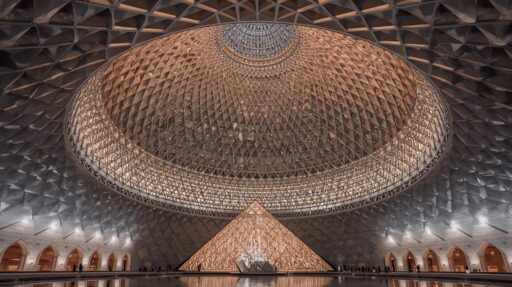
The mosque’s 82 domes are masterclasses in architectural geometry. Their internal structure is a complex interplay of arches and pendentives that allows the circular base to support the rounded vault. But it is their external and internal decoration that truly captivates. The domes are adorned with intricate, cascading patterns that resemble descending stars or celestial flowers. These are often based on star polygons, created by overlapping circles and squares. The number of points on a star can hold symbolic meaning; an eight-pointed star, for example, is a common motif representing the eight angels that will carry Allah’s throne on the Day of Judgment. As one gazes upward inside the main prayer hall, the domes create a sense of a celestial canopy, lifting the worshipper’s mind and soul towards the heavens.
The Minarets: Blending Styles and Mathematical Precision
The mosque’s four minarets, each standing over 100 meters tall, blend architectural styles from different Muslim civilizations—Mamluk, Ottoman, and Fatimid. Despite their different stylistic elements, they are bound together by geometric harmony. Their structures are composed of successive geometric shapes: a square base transitions to an octagonal shaft, which then rises to a circular gallery, culminating in a golden finial. This progression from earth-bound square to celestial circle is a classic architectural metaphor in Islamic design, representing the journey of the soul from the material world to spiritual enlightenment. The precise proportions and ratios used in their construction reflect the Islamic belief in a universe created according to a divine and mathematical plan.
The Interior: A Symphony of Light, Pattern, and Reflection
Inside the main prayer hall, geometry reaches its apotheosis. The world’s largest chandelier, itself a complex geometric form, hangs beneath the central dome, its light refracting through thousands of Swarovski crystals. The walls are clad with marble panels inlaid with delicate floral and geometric pietra dura work. Most strikingly, the qibla wall features the 99 names (attributes) of Allah, written in elegant Kufic calligraphy. This calligraphy is itself a geometric art form, with the letters meticulously measured and proportioned. The entire space is designed to inspire awe and contemplation, using rhythm, repetition, and symmetry to create a tranquil, ordered environment that reflects the perfection of the divine creation.
Conclusion: A Modern Monument to an Ancient Artistic Language
The Sheikh Zayed Grand Mosque stands as a triumphant contemporary interpretation of a timeless artistic tradition. It demonstrates that Islamic geometry is not a frozen historical style but a living, evolving language. By employing this language on such a grand and meticulous scale, the mosque does more than provide a space for prayer; it serves as a global educational tool, introducing millions of visitors to the spiritual and intellectual depth of Islamic culture. It proves that geometry is far more than math—it is a bridge between the human and the divine, a visual prayer etched in marble, gold, and light, inviting all who enter to contemplate the unity and beauty of creation.