

Introduction
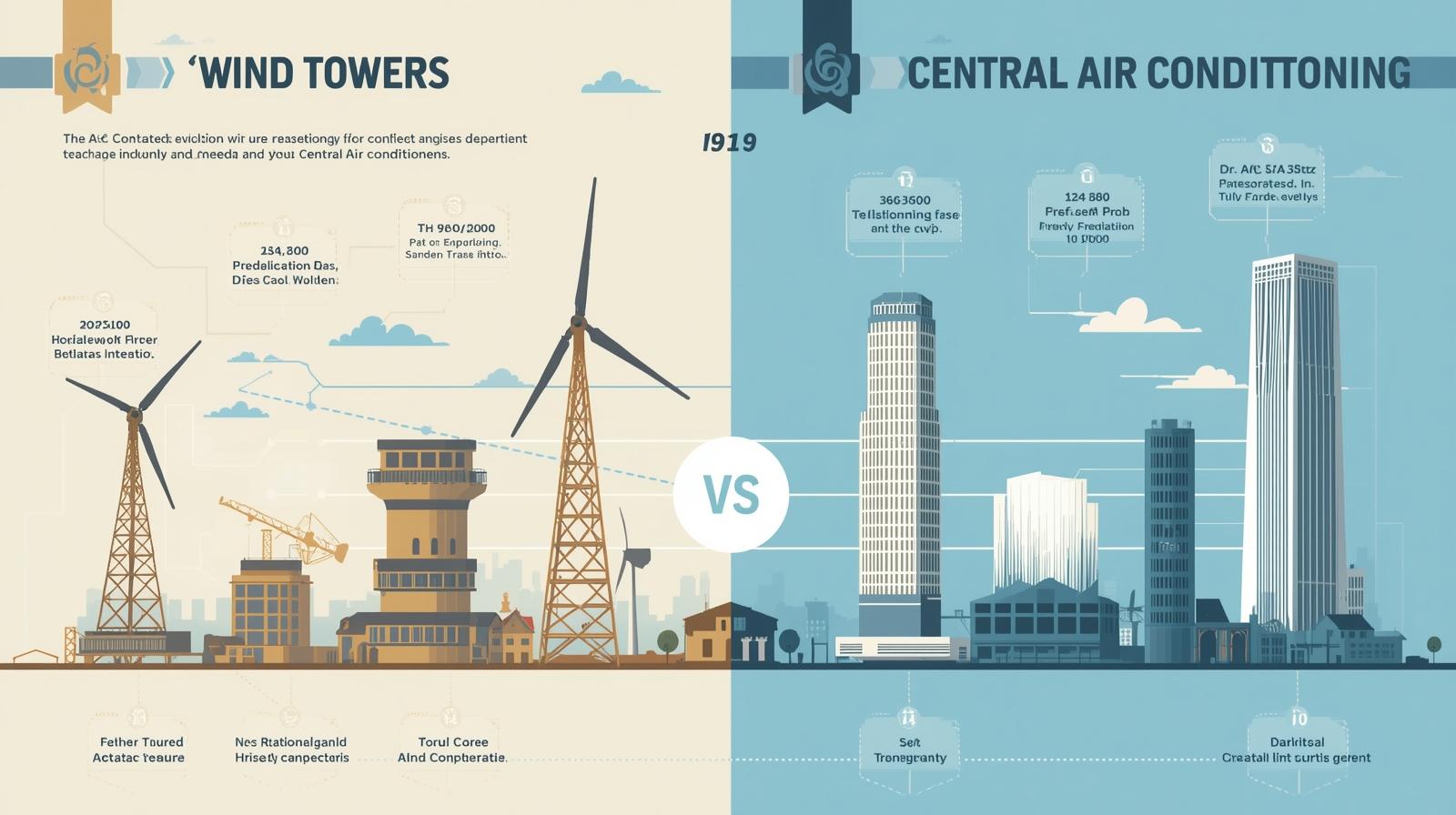
In the relentless heat of the Arabian Gulf, the ability to create a cool, habitable environment has always been a matter of survival and a marker of civilization. Long before the hum of air conditioning units became the soundtrack of modern UAE, the people of the region employed ingenious architectural solutions to tame the desert climate. The most iconic of these is the wind tower, or “Barjeel,” a masterpiece of passive cooling that represents a deep understanding of physics and the local environment. The evolution from these traditional structures to modern climate control is not just a story of technological progress; it is a narrative that reflects the UAE’s journey from a resource-scarce society to a global innovator, while simultaneously sparking a revival of interest in the sustainable wisdom of the past.
The Ingenious Barjeel: Catching the Desert’s Breath
The wind tower is the quintessential symbol of traditional Gulf architecture. This tall, chimney-like structure, capped with open sides, was designed to capture even the faintest breezes from any direction high above the ground. The captured wind would be funneled down the tower and directed into the rooms below. The beauty of the system lay in its simplicity and effectiveness. As the air descended, it was often channeled over a pool of water or moist clay jars, cooling it further through evaporation before circulating through the living spaces. The resulting airflow created a comfortable microclimate, allowing residents to survive the scorching summer months. The wind tower was a zero-energy cooling system, a testament to the sustainable building practices that were born out of necessity and a profound harmony with the environment.
The Arish: Sustainable Living with Palm Fronds
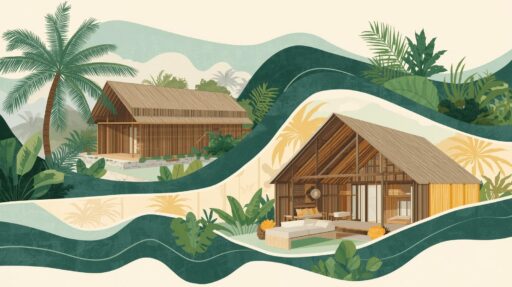
For more modest dwellings and seasonal structures, the primary building material was the palm frond, and the resulting structure was known as an “Arish.” These houses, built from the trunk and fronds of the date palm, were perfectly adapted to the climate. The woven frond walls and roofs provided excellent insulation, keeping the interior cool during the day and warm at night. They were also porous, allowing for natural ventilation. The construction of an Arish was a community effort, and the skills involved were passed down through generations. While less permanent than coral stone or mud-brick buildings with wind towers, the Arish represented a mobile, sustainable, and highly effective form of desert living that utilized locally available, renewable resources.
The Revolution: The Advent of Mechanical Cooling
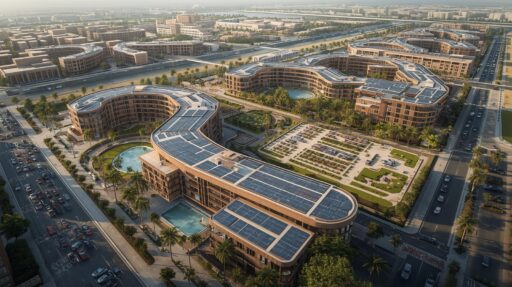
The discovery of oil and the subsequent economic transformation of the UAE in the latter half of the 20th century ushered in a revolution in cooling technology. The widespread availability of electricity and wealth made mechanical air conditioning not just a luxury but a fundamental requirement for the rapid urbanization and construction of glass-fronted skyscrapers. Air conditioning made year-round comfort possible on an unprecedented scale, enabling the creation of vast indoor shopping malls, sprawling residential complexes, and climate-controlled offices. This technological leap was a key enabler of the UAE’s modern miracle, allowing it to attract a global workforce and build a thriving, 21st-century economy in one of the world’s harshest climates.
A Return to Roots: Modern Architecture Meets Ancient Wisdom
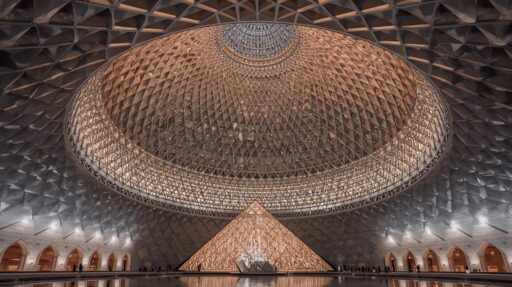
In recent years, a fascinating synthesis has begun to emerge. As the world grapples with climate change and the high energy costs of mechanical cooling, architects and planners in the UAE are looking back to the wisdom of the Barjeel and the Arish. The principles of passive cooling are being integrated into contemporary sustainable design. Modern buildings now often feature double-skinned facades that create a buffer zone against heat, strategic orientation to minimize sun exposure, and advanced ventilation systems that mimic the function of the wind tower. The Masdar City development in Abu Dhabi is a prime example, utilizing a modern, high-tech “wind tower” in its central plaza to create a comfortable outdoor microclimate. This represents a full-circle moment, where the sustainable intelligence of the past is being rediscovered and enhanced with modern technology.
Conclusion
The evolution from wind towers to central air conditioning is a powerful metaphor for the UAE’s journey. It showcases a nation that boldly embraced the future and the technologies that made its modern landscape possible. However, the growing revival of interest in passive cooling principles demonstrates a maturing perspective—one that seeks to blend innovation with sustainability and a respect for heritage. The wind tower is no longer seen as an obsolete relic but as an icon of timeless design intelligence. In looking back to this ancient technology, the UAE is not rejecting progress but is instead forging a more sustainable and culturally resonant path forward, proving that the solutions for the future can often be found in the wisdom of the past.