

Introduction
Before the age of glass and steel, the most prevalent and sustainable form of architecture in the UAE was the Arish: a house meticulously constructed from the trunks and fronds of the date palm. These seemingly humble structures were, in fact, masterpieces of environmental design, perfectly adapted to the harsh desert climate. While the sight of a traditional Arish is now rare, its influence is experiencing a quiet but powerful renaissance. The principles, forms, and symbolism of this vernacular architecture are increasingly inspiring a new generation of Emirati architects and designers, who are looking to their own heritage to create a more culturally resonant and sustainable modern aesthetic.
The Anatomy of an Arish: A Lesson in Sustainable Design
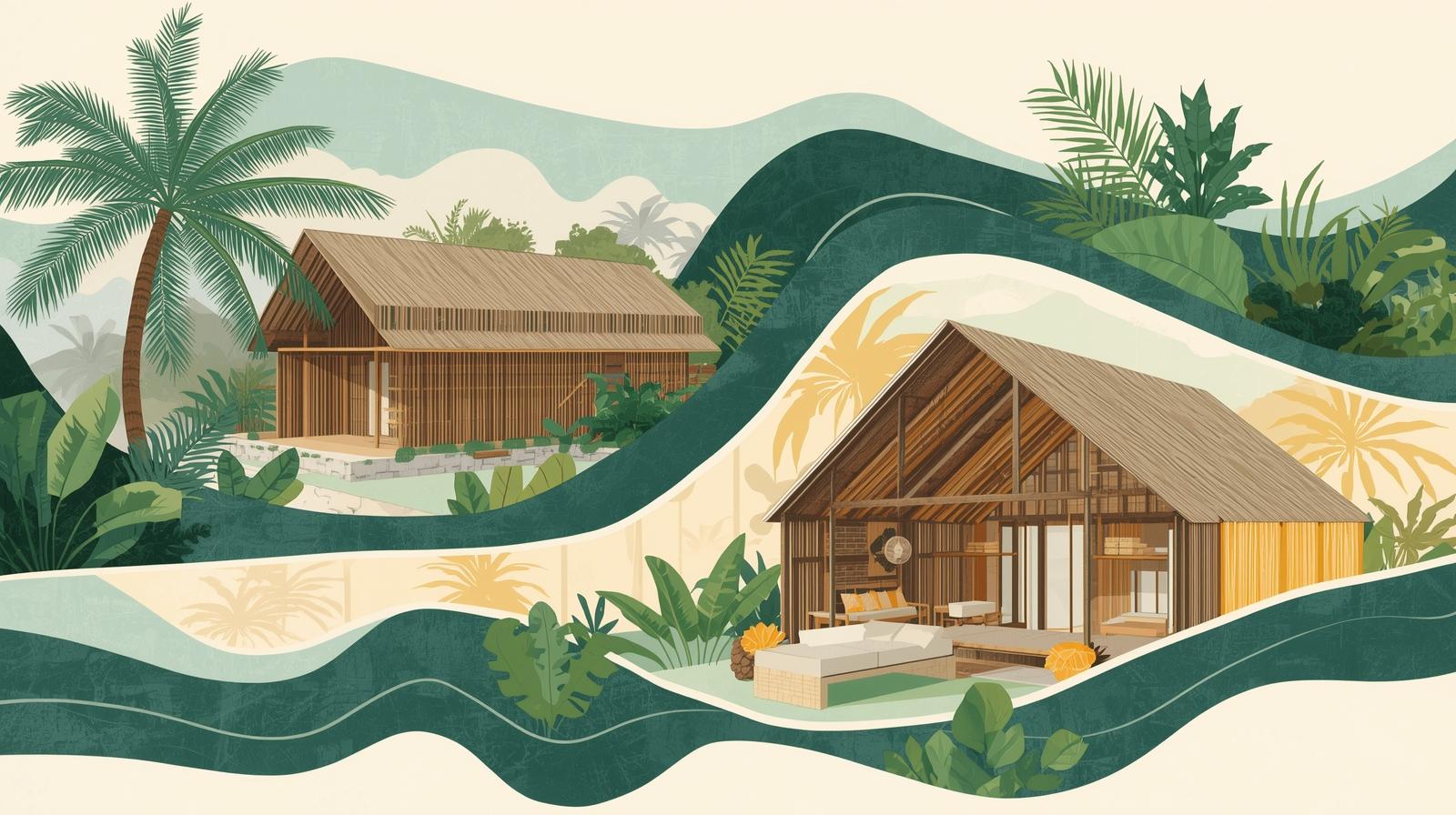
The construction of an Arish was a community endeavor based on deep ecological knowledge. The primary structure was built from palm trunks, which provided a sturdy frame. The walls and roof were then thatched with layers of palm fronds (areesh), woven together to create a thick, insulating shell. This design offered multiple environmental benefits. The porous nature of the fronds allowed for constant, passive ventilation, while the high thermal mass of the structure kept the interior cool during the blistering daytime heat and retained warmth during cooler nights. The materials were entirely local, biodegradable, and required minimal processing. The Arish was a testament to a circular economy long before the term was coined, representing a way of life that was in harmonious balance with the natural world.
Cultural Symbolism: The Palm as the Tree of Life
To understand the Arish is to understand the cultural centrality of the date palm, known as the “Tree of Life.” Every part of the tree was used: the fruit for food, the trunks for structure, the fronds for weaving, and the fibers for rope. The Arish was the physical manifestation of this holistic relationship. It was more than a shelter; it was a symbol of resourcefulness, community, and survival. The process of building an Arish—often a collective effort for a newlywed couple or a family—strengthened social bonds. Its organic, curvilinear forms and the dappled light filtering through its fronds created a living environment that felt deeply connected to the local landscape, in stark contrast to the hard, imported lines of much modern architecture.
Modern Interpretations: From Literal to Abstract
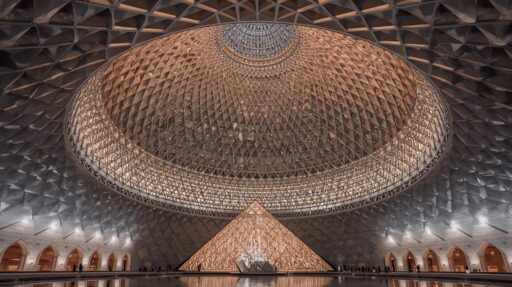
Today, the Arish is inspiring modern architecture in several compelling ways. The most direct interpretation is seen in the revival of the building technique itself for cultural pavilions, eco-resorts, and heritage sites. The Sharjah Heritage Museum and several structures in the Al Fahidi Historical Neighbourhood in Dubai showcase authentic Arish construction, preserving the craft. More abstractly, contemporary architects are deconstructing the Arish’s principles. They are using modern materials to create facades that mimic the fronds’ ability to provide shade and ventilation. The “Mashrabiya” screens on buildings like the Al Bahar Towers in Abu Dhabi are a high-tech evolution of this idea, with computer-controlled panels that open and close to manage solar gain, directly inspired by the adaptive, responsive nature of the traditional Arish wall.
A Philosophy for the Future: Biophilia and Cultural Identity
The influence of the Arish extends beyond mere form into the realm of design philosophy. Its use of natural, locally sourced materials aligns perfectly with the modern global movement towards biophilic design, which seeks to connect occupants more closely to nature. Emirati architects are now exploring how to incorporate these principles into large-scale projects, asking how a skyscraper can foster the same sense of organic connection as a palm-frond house. Furthermore, in a globalized world where city skylines often look identical, turning to the Arish is a powerful way to assert a unique cultural identity. It provides a design vocabulary that is authentically rooted in the Gulf, offering an alternative to the ubiquitous glass box.
Conclusion: Weaving the Past into the Future
The humble Arish is having a profound impact on the future of Emirati architecture. It serves as a constant reminder that the most advanced solutions are often found by looking back at the wisdom of the past. Its lessons in sustainability, community, and harmony with the environment are more relevant than ever. As the UAE continues to build its 21st-century cities, the spirit of the Arish—its respect for nature, its cultural authenticity, and its elegant simplicity—offers a vital blueprint. It challenges architects not just to build on the land, but to build with it, weaving the enduring symbolism of the palm tree into the very fabric of the nation’s future.